As the world moves toward net-zero emissions and a circular economy, recycled plastics have evolved from an environmental initiative into a core ESG strategy and a key source of competitive advantage for businesses. PCR (Post-Consumer Recycled) and PIR (Post-Industrial Recycled) are the two primary materials driving this green transformation. They represent the regenerative value of plastics at different stages of their lifecycle and guide both industry and society toward a more sustainable future.
What Are PCR and PIR?
PCR (Post-Consumer Recycled Resin) refers to plastic products that have been used by consumers and subsequently collected through recycling systems. These materials are reprocessed through sorting, washing, shredding, and re-pelletizing to become new raw materials. Common PCR sources include beverage bottles, milk jugs, shampoo containers, and plastic housings from electronic and household appliances—transforming waste into valuable, reusable resources with high environmental impact.
Everyday recycling activities in Taiwan—where municipal governments collect and sort PET bottles—form the foundation of the PCR supply chain. Transparent PET bottles may be converted into eco-friendly yarns for sportswear or reprocessed into PCR plastic pellets used in packaging, stationery, and tool cases. Government incentives and corporate green procurement programs continue to expand market demand for PCR materials.
PIR (Post-Industrial Recycled Resin), by contrast, originates from manufacturing processes. It includes edge trims, offcuts, sprues, and test parts that are recovered before reaching the consumer market—either recycled in-house or reprocessed by professional recyclers. Due to its clean origin and consistent quality, PIR is a highly efficient solution for reducing material waste and improving circularity within production lines.
For example, many electronics, automotive parts, and packaging manufacturers in Taiwan immediately shred sprues, defective products, and edge waste generated during injection molding. These materials are blended back with virgin resin and reused in production, reducing costs and minimizing waste disposal. As such, PIR serves as a practical and accessible entry point into the industrial circular economy.
PCR: The Challenge and the Inevitable Path of the Circular Economy
Despite its clear environmental benefits, PCR involves a far more complex regeneration process than PIR and faces three major challenges:
- High collection and sorting costs: Post-consumer plastic waste is widely dispersed and requires an extensive collection network—including municipal cleaning teams, recyclers, retail outlets, and convenience store collection points—combined with advanced optical sorting systems at recycling facilities to ensure material purity. Separating clear PET bottles from colored plastics, for instance, is a technically demanding task.
- Contamination and quality control issues: PCR materials may contain food residue, adhesive labels, or mixed polymers. Large recycling facilities must apply multi-step processes such as alkaline washing, flotation separation, and high-temperature melt filtration to produce clean pellets, yet maintaining consistent material quality remains a technical challenge.
- Strict regulatory and application barriers: When used for food-contact packaging, PCR must comply with rigorous safety standards, such as U.S. FDA or EU EFSA certifications, placing high demands on traceability and advanced purification technologies.
Nevertheless, PCR significantly reduces carbon footprints, lowers dependence on fossil-based raw materials, and directly addresses plastic waste issues. As a result, regulations such as the EU Single-Use Plastics Directive, along with commitments from global brands like Apple and Unilever, are driving higher PCR content requirements. While challenging, this path is unavoidable for sustainable industrial development.
PIR's Role: A Pioneer in Efficiency and Waste Reduction
Compared to PCR, PIR stands out for its operational efficiency. It enables immediate material reuse within factories—fast, clean, and cost-effective—helping manufacturers improve resource productivity and reduce waste.
However, PIR does not address post-consumer plastic waste and therefore cannot achieve full circularity on its own. In a closed-loop vision, PIR functions as the “internal loop,” while PCR tackles the more complex “external loop” of the circular economy.
Born for Circularity: KING's 5-Gallon PET Preform Solution as an rPET Champion
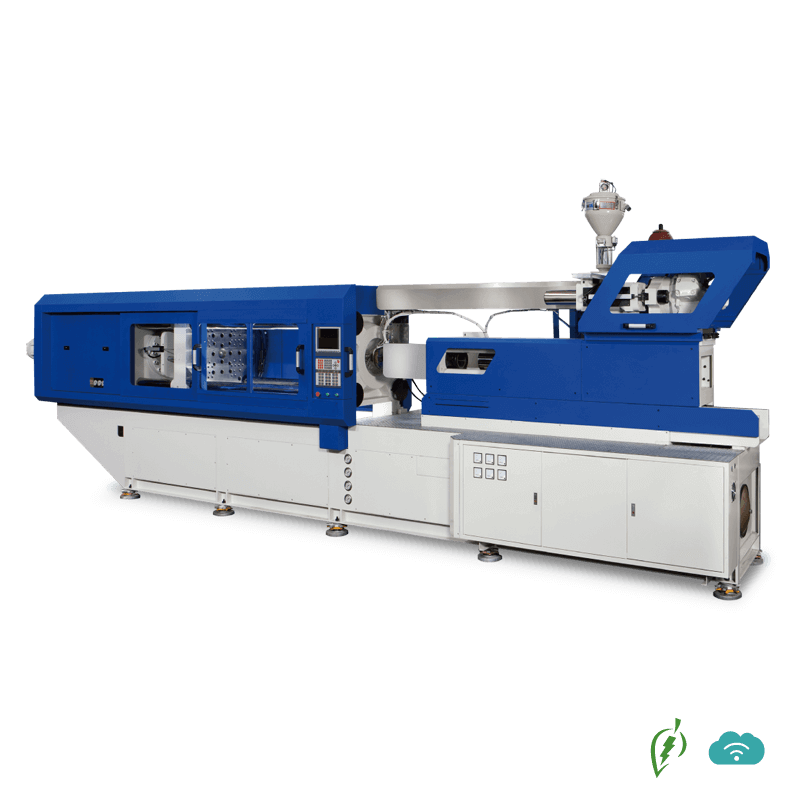
As PCR becomes increasingly critical to sustainability strategies, preparing for circularity at the manufacturing source has become a core responsibility for equipment providers. KING's Solution understands this deeply. More than 30 years ago, we pioneered early PET bottle machinery in Taiwan and later focused on developing our signature 5-gallon PET preform injection molding machine—engineered specifically to maximize rPET circular value from the very beginning.
We specialize in large 5-gallon PET preforms widely used in water dispensers and commercial bottled water systems. These applications operate within a closed-loop reuse system, where each bottle can be reused over 30 times, dramatically extending product lifespan and reducing single-use plastic waste. Once retired, these bottles—made from single-material PET with controlled sources and minimal contamination—can be recycled into high-quality rPET, making them an ideal feedstock for high-value PCR applications.
Every KING's injection molding machine is designed with sustainability at its core—reducing material consumption, minimizing pollution, and enhancing circular efficiency. We believe plastics are not disposable waste but valuable resources essential to modern life. A true circular economy does not begin at the end of a product's life, but at the design and manufacturing stage. With this philosophy, we provide our partners with smart, sustainable machinery that enables low-carbon production and full participation in the circular economy—from the very first step.